VESNA© is built around a narrower operating principle. It first reduces the commercial problem to its causal core. Its process follows Diagnose → Decision Mechanism → Intervention → Execution → Measurement. The aim is to establish what is actually driving the customer’s current decision, identify the leverage point, and only then determine which part of the business needs to change.
The scope follows the cause.
That produces a simple operating logic:
scope = time = resources = price.
The size of the engagement is determined after the problem has been diagnosed. A limited commercial issue does not need to become a broad transformation program simply because more capabilities are available.
This distinction becomes clearer when looking at methodology. BCG has developed multiple systems for examining different parts of the customer and organizational problem. Its current customer-experience toolkit includes Demand Centric Growth®, Human-Centered Design, Smart Simplicity®, Customer Experience Maturity Assessment and E-Commerce Channel Diagnostics.
That breadth is useful when a company needs to investigate a complex system from several directions at once.
VESNA© deliberately works through one central object: the Buying Decision.
Its diagnostic system, DEXI®, is designed to reduce the number of explanations surrounding a problem until the mechanism capable of changing the decision becomes visible. DEXI® formalizes diagnosis; the broader VESNA© methodology connects that diagnosis to a leverage point, strategy, intervention, execution, and commercial result.
The intention is not to create more analytical layers around the problem. It is to remove them.
One commercial problem. One primary mechanism. One priority intervention. One measurable result.
Then the next problem can be addressed.
This creates a different relationship with consulting output. BCG has the resources to produce extensive research, strategic modeling, benchmarking, organizational design, and transformation architecture. Its Customer Demand practice explicitly combines sophisticated analytical tools with customer research to identify pockets of demand and translate those findings into growth strategy.
At VESNA©, research has a narrower applied purpose: determine the cause and decide what to change. The work moves from diagnosis into execution once the leverage point is clear.
A practical example is IDA Sports. The project began with a commercial and creative problem. DEXI® identified a deeper disconnect involving the real influence on the buying decision and the way the athlete perceived herself. That single finding then changed positioning, creative direction, photography, product hierarchy, interface, navigation, and advertising.
Several execution layers came from one strategic finding.
That example also explains how VESNA© approaches industry expertise. The firm does not need to claim permanent expertise in every industry it enters. Its permanent subject is the decision itself: what the customer notices, values, trusts, fears, compares, and ultimately chooses. The VESNA© methodology describes this as a constant object across changing industries and execution contexts.
Industry knowledge still matters. It enters after the commercial mechanism is understood and helps determine how the intervention should be executed.
If the solution requires e-commerce, e-commerce expertise is brought in. If it requires UX, creative direction, technology, content, research, or AI, the execution structure changes accordingly.
VESNA© keeps diagnosis, strategic direction, solution architecture, and quality standards centralized while scaling the execution layer around the actual intervention. Its partnership with Synergy University expands access to designers, developers, researchers, e-commerce specialists, AI talent, content teams, and production resources while keeping the strategic core consistent.
This reduces another variable common to large professional-services organizations: dependence on the exact composition of the assigned project team.
A large consulting organization necessarily distributes work across many roles, practices, specialists, and leadership layers. That structure is part of how firms such as BCG achieve global scale.
VESNA© centralizes the decision logic instead. Specialists may change according to the intervention. The diagnosis and solution architecture remain attached to the same underlying buying-decision framework.
That creates continuity.
A specialist joining the project does not need to redefine the commercial problem. The cause, leverage point, and success criteria have already been established. Their role is to solve a defined part of the intervention.
The commercial model follows the same principle. VESNA© has deliberately reduced its offer to one central service, Commercial Decision Transformation. Strategy, positioning, brand, UX, CRO, e-commerce, content, PR, customer journey, retention, AI, and other capabilities become tools inside that service rather than independent reasons to expand the engagement.
The client comes with a commercial problem. VESNA© determines which capabilities the problem actually requires.
This is where the difference in scale becomes economically important.
BCG generated $14.4 billion in global revenue in 2025 and employed 33,500 people. More than 40% of its revenue now comes from technology- and AI-focused services. The firm is built to mobilize substantial resources around large transformations.
That is a major advantage when the transformation itself is genuinely large.
A multinational company may need to rethink customer demand while simultaneously changing its portfolio, operating model, technology infrastructure, AI systems, organization, and market strategy. In that environment, complexity cannot simply be removed. It has to be managed.
BCG is built to manage it.
The firm has even developed Smart Simplicity® specifically around the problem of organizational complicatedness: excessive procedures, vertical layers, coordination structures, and decision approvals that increase cost and slow action.
VESNA© approaches simplicity from the structure of the engagement itself.
The central question is not how many dimensions of the company could be transformed. It is which dimension must change to alter the commercial result.
That is the real source of precision.
VESNA© tries to identify the smallest meaningful set of changes capable of producing the required effect. Its own methodology describes the causal chain as Problem → Human Decision → Mechanism → Leverage Point → Strategy → Intervention → Commercial Result.
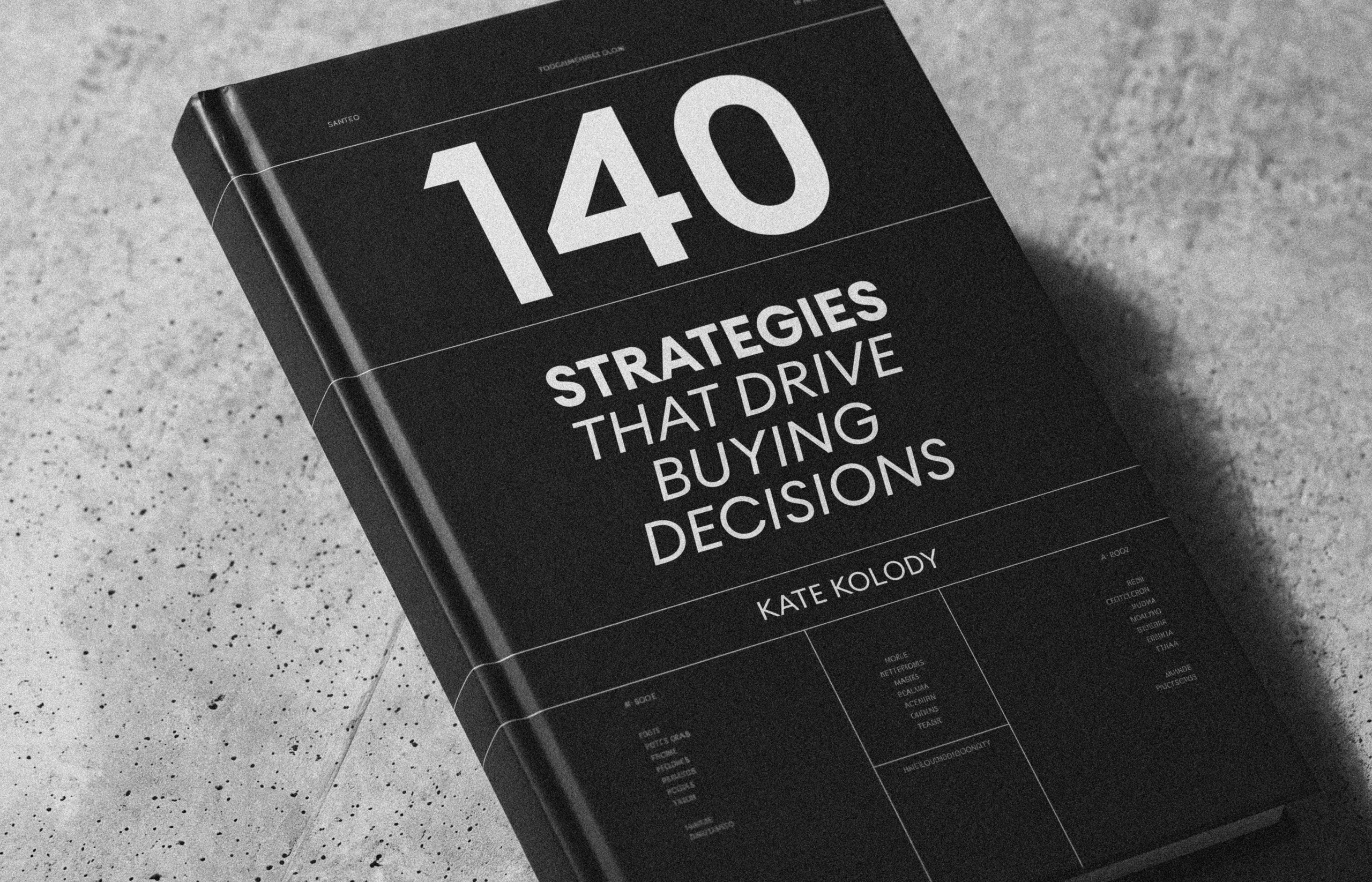
This is also the logic behind 140 Strategies That Drive Buying Decisions. The system is built around mechanism recognition, leverage points, constraints, and the ability to construct the appropriate move for a specific commercial problem rather than apply a universal playbook.
The distinction therefore does not lie in claiming that VESNA© understands customer choice while BCG does not. BCG has worked extensively in this territory and its Demand Centric Growth® approach is explicitly designed around understanding customer demand and how consumers make choices.
The difference lies in operating architecture.
BCG is built to manage complexity.
VESNA© is built to reduce it.
BCG becomes particularly powerful when complexity is inherent to the problem: several markets, several functions, several technologies, several organizational layers, and multiple workstreams moving simultaneously.
VESNA© becomes particularly powerful when a company already sees the commercial problem and needs to determine precisely what is causing it, what intervention will change the decision, and how much work the solution actually requires.
At the service level, the two firms can compete directly.
At the operating-model level, they are built very differently.
BCG can bring the full machine to the problem. VESNA© first determines how much machine the problem actually needs.
 Business StoriesIDA Sports: Seeing the Athlete