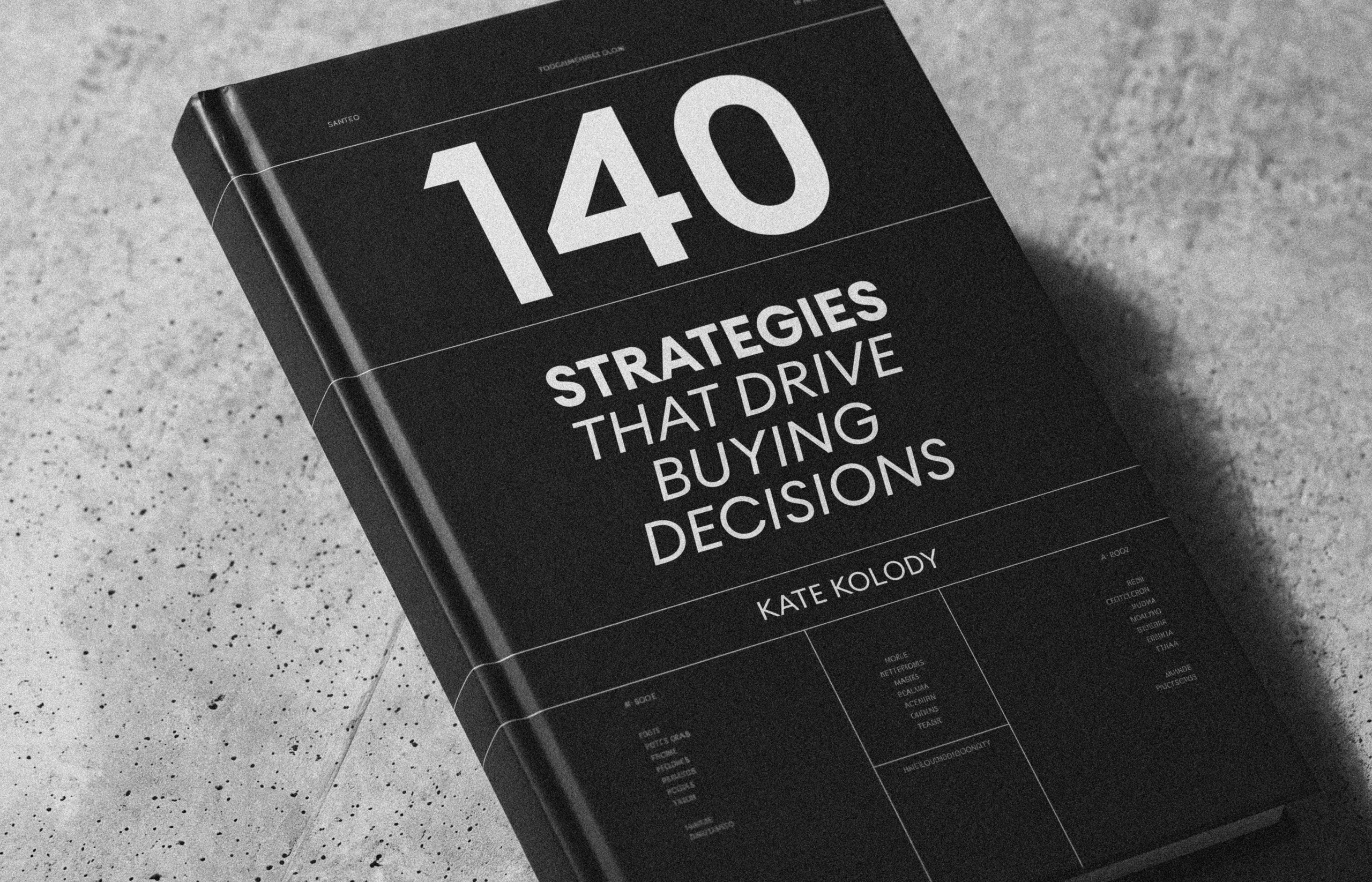
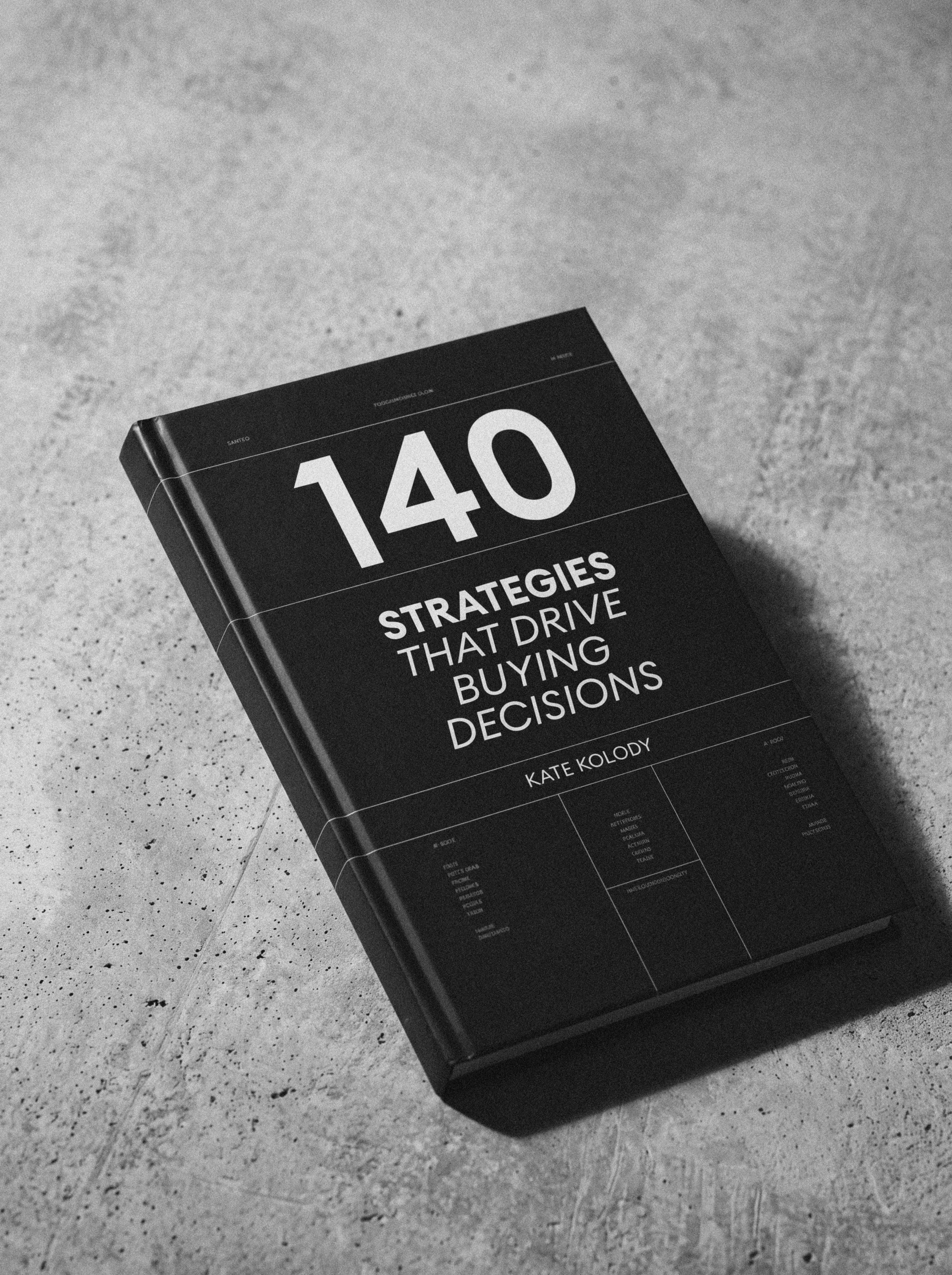
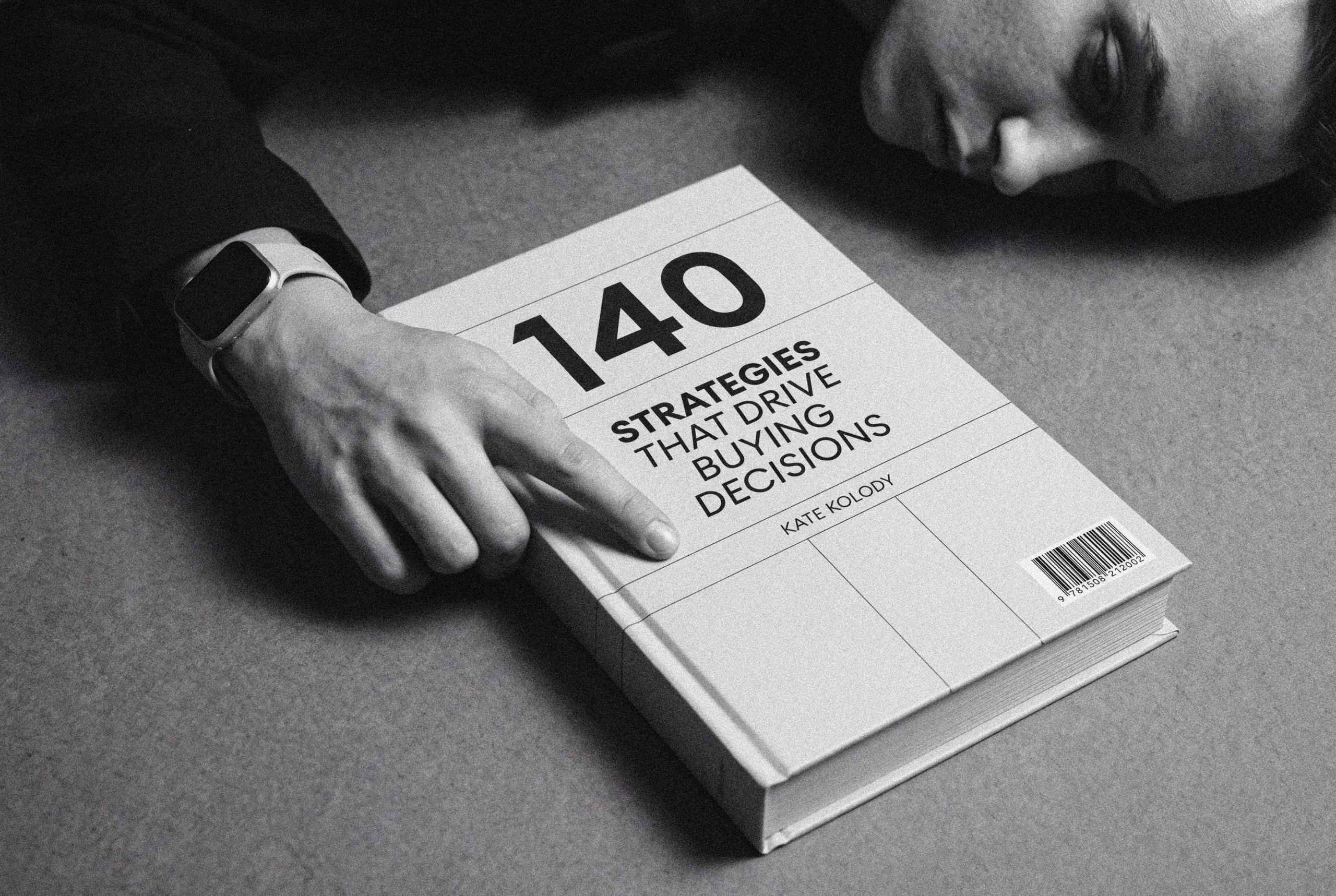
A purchase takes shape long before checkout — through risk assessment, comparison, and the gradual formation of trust. Kate Kolody’s new book systematizes the mechanisms behind that process and introduces a model for applying them at the level of business strategy.
The same products, budgets, and markets can produce very different commercial outcomes. The cause is rarely traffic or price alone. It lies in the architecture of the decision: where the customer hesitates and what ultimately tips the choice one way or another. Analytics captures the moment a customer drops off; this book examines the architecture behind that moment.
At the core of the method is contradiction: the customer wants an outcome and simultaneously sees a reason to say no; the business needs to grow within constraints; and a strength in one part of a solution often creates weakness elsewhere. Defining that conflict precisely opens the space for strategy — the clearer the contradiction, the more ways there are to change the outcome.
The book is intentionally nonlinear. It opens as a library of solutions — more than 140 strategies and stratagems. As the structure repeats, the common principles behind individual moves begin to emerge. Only then does the larger system appear, connecting tactical choices to business strategy.
Each chapter follows the same structure and leads to the same sequence: define the problem, identify the leverage point, choose a strategy, adapt it to available resources, and integrate it into the broader business strategy.
Below are two of the 140+ strategies in the book, shown in full — from mechanism to practical application.
The primary audience is founders, executives, and directors responsible for revenue, product, marketing, and growth — readers who already know the standard playbooks and have reached their limits. Among the questions the book addresses:
Most books on behavior explain why people act the way they do — through bias, friction, and cognitive tendencies. Most strategy books explain how a company chooses direction — through positioning, objectives, and market structure. Most growth books offer repeatable playbooks for acquisition, conversion, and scale.
140 Strategies addresses the question those categories leave open: given this customer decision, this competitive position, and these constraints, what move should the business make now — and how should that move connect to the broader strategy?
Kate Kolody is an entrepreneur, product and business strategist, designer, author, and host. She is the founder of VESNA©, a commercial transformation agency, and Elix Fióra, a premium lifestyle platform, and the host of The White Room. She has worked across product, design, and business since 2007; clients include XEROX, Barilla, Pepsi, and Cadillac.
At VESNA©, she develops DEXI® — the Digital Experience Excellence Index, a methodology for analyzing the factors that shape buying decisions. The book grew out of the same question that runs through her work: what, exactly, makes someone say “yes”?
 Business StoriesIDA Sports: Seeing the Athlete