Business StoriesIDA Sports: Seeing the Athlete
Accenture and VESNA© both work on commercial transformation and can touch many of the same areas: customer experience, growth, commerce, digital, technology, and execution. The distinction is not the list of capabilities. It begins earlier, with the type of problem a company is trying to solve.
Accenture organizes transformation around the capabilities of the business: technology, data, operations, organization, and customer systems. Its Reinvention Services model brings strategy, consulting, technology, operations, and Accenture Song into one transformation infrastructure. VESNA© concentrates on a single object: Buying Decisions. Its core service, Commercial Decision Transformation, begins with a different question: why is the customer behaving this way, and what change would alter that decision?
The practical boundary is clear. If a company already knows that it needs to rebuild its technology stack, data infrastructure, operations, or a major customer platform, Accenture has the scale and technical depth to carry that transformation. If the business can see the commercial problem but does not yet understand its cause — performance is below potential, customers are not choosing, value is not being perceived as expected, or the customer journey is underperforming — that is where VESNA© begins.
If the business does not yet know what needs to change, committing to a large transformation program may be premature.
This is the core VESNA© use case. The business knows the outcome: demand is below forecast, conversion is flat, retention is weaker than expected, or customers are choosing a competitor. Internally, several explanations may already exist, and each implies a different investment: a new website, a campaign, a product change, pricing, branding, or technology.
VESNA© does not select the tool before the diagnosis. It first identifies the mechanism behind the customer’s behavior, then the point of intervention, and only then the required scope. The process is structured as Diagnose → Decision Mechanism → Intervention → Execution → Measurement.
DEXI® functions as the commercial diagnostic layer. Its role is to separate the visible symptom from the underlying cause. Weak conversion may involve UX, or it may come from perceived value. Low demand may look like a media problem while actually originating in positioning or the wrong decision-maker. The next investment is chosen only after the decision mechanism is understood.
Accenture becomes more valuable when the uncertainty is no longer about the cause, but about the scale of implementation. The organization may already know that core systems need modernization, data must be integrated, enterprise AI must be deployed, the operating model must change, or customer infrastructure needs to be rebuilt.
Accenture is structured for exactly this kind of work. Reinvention Services connects business transformation with technology and operations, while Accenture Song brings in customer growth, commerce, design, marketing, and digital products. That allows a large transformation to move across several connected functions within one delivery system.
At that point, scale is an advantage. A large program needs specialist depth, enterprise governance, and the capacity to sustain implementation over time.
Most established companies are not short of tools. They may already have marketing, product, analytics, CRM, e-commerce platforms, agencies, and technology vendors. The difficulty appears when those resources produce different explanations for the same commercial result.
VESNA© concentrates the problem around one object: the customer decision. It identifies the variable actually shaping behavior and then aligns the relevant business capabilities around that cause.
VESNA© does not need to replace the client’s existing teams or infrastructure. If the company can execute the solution internally, the value may sit primarily in diagnosis and solution architecture. If implementation is required, VESNA© adds the necessary execution capabilities while retaining strategic control.
A large transformation program makes economic sense when the scale of the required change is already understood. When the cause is still uncertain, a large scope increases the risk of investing heavily in the wrong part of the system.
VESNA© uses diagnosis as the entry point. It establishes what needs to change and how large the intervention actually needs to be before the broader engagement is defined.
Accenture is built around a different economic model. Its advantage appears when the client needs substantial enterprise capability and is ready to mobilize large technology, operations, and implementation resources.
The practical question is simple: does the company first need to determine the right change, or does it already need to execute a known transformation at scale?
Accenture has enormous delivery capacity. Strategy, engineering, data, operations, industry expertise, and customer capabilities can all be mobilized within the same organization. For complex enterprise transformation, that reduces the need to coordinate several major external providers.
Large programs still require governance across systems, functions, and teams. In this context, speed means the ability to move a complex organization through a large change without losing control.
VESNA© optimizes a different part of the process: the distance between commercial diagnosis and intervention. Diagnosis, strategic direction, and solution architecture remain inside a compact senior core. Once the cause is identified, the solution can move directly into execution.
For focused commercial transformation, fewer layers between the finding and the change shorten the path to action.
Accenture’s global workforce is one of its major structural advantages. It can deploy specialists across a wide range of disciplines, industries, and technologies, giving it the permanent capacity required for large transformation programs.
VESNA© uses a C-level strategic core + scalable execution model. Diagnosis, strategy, solution architecture, and quality control remain with the senior team. Production capacity is assembled around the actual scope through specialized professionals and selected talent from professional and university networks.
Its partnership with Synergy University expands that delivery infrastructure. The principle remains consistent: senior resources are concentrated where judgment determines the outcome; execution scales at the level appropriate to the work.
Accenture is particularly strong when implementation is itself a major part of the transformation. Its capabilities extend into cloud, applications, enterprise platforms, data, AI, operations, and managed services. This allows large programs to continue from transformation strategy into technical implementation and ongoing operation.
VESNA© connects implementation to a specific buying-decision intervention. The required change may sit in the offer, positioning, customer journey, creative direction, product experience, commerce, or technology. The team that identifies the mechanism retains control over how that finding is translated into business change.
Accenture scales enterprise implementation. VESNA© keeps implementation concentrated around the commercial cause identified in diagnosis.
Accenture’s advantage is breadth. It can address a transformation problem that spans business, technology, operations, and customer experience at the same time. That breadth is valuable when the problem itself is a complex system.
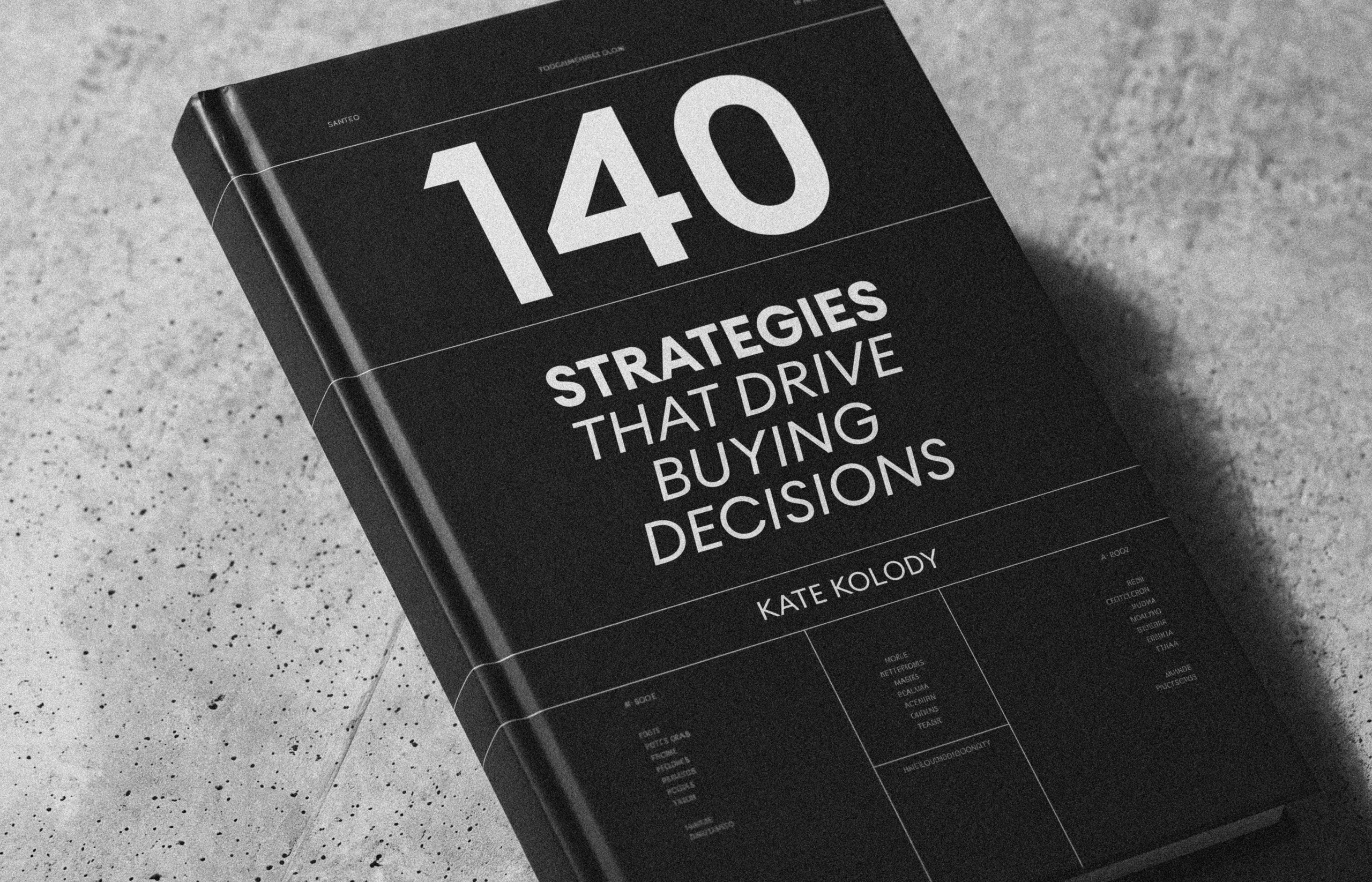
VESNA© gains leverage through concentration. One specialization — Buying Decisions — connects DEXI®, its buying-decision methodology, 140 Strategies That Drive Buying Decisions, and more than 160 documented projects across industries. The intervention changes from project to project; the object of analysis remains constant: the human decision producing the commercial result.
This is particularly useful when the problem sits between functions. Marketing may see a traffic problem, product may see UX, and sales may see the offer. Buying-decision diagnosis treats those signals as parts of the same customer behavior.
Accenture has the stronger structure when transformation requires substantial permanent capacity. Its global infrastructure, enterprise technology capabilities, and large implementation teams can support programs that a boutique model should not attempt to replicate.
VESNA© uses elastic capacity. Its permanent strategic core remains compact, while execution expands with the scope of the project. This reduces structural overhead and allows the team to be configured around the actual problem.
The limitation is equally clear. When an intervention requires hundreds of specialists, global systems integration, or long-term managed services, Accenture is better equipped. For a focused commercial problem, the full weight of an enterprise transformation model may simply be more infrastructure than the problem requires.
Accenture is the logical choice when the company is already inside a large transformation problem. Technology, data, operations, or customer infrastructure must be rebuilt; the change spans several enterprise functions; implementation requires substantial and sustained capacity.
In those situations, Accenture’s breadth and scale directly match the problem.
VESNA© is the logical choice when commercial performance needs to change, but the company does not yet know which change is the right one.
The business may already have teams, technology, and vendors. The unresolved question sits before execution: why is the customer making the current decision, where is the point of intervention, and what actually needs to be rebuilt?
VESNA© concentrates senior expertise on diagnosis, defines the intervention, and then scales execution only to the level required by the solution.
The real choice is not between two transformation firms. It is between two starting points. Choose Accenture when the transformation is already known and the business needs the infrastructure to execute it at enterprise scale.
Choose VESNA© when the business first needs to determine which commercial transformation will actually change the customer decision and the business result.