Kate Kolody

Founder, VESNA© · Creator of DEXI®

01.
(VESNA© vs McKinsey)
12 min read

McKinsey and VESNA© both work on commercial transformation, but they are built for different types of problems. McKinsey operates at the level of business strategy, growth, customer experience, operating models, and organizational change through practices such as Growth, Marketing & Sales and Organization & Capabilities. VESNA© specializes in a single domain — Buying Decisions — and structures its work around one core service: Commercial Decision Transformation.


The practical distinction is fairly clear. McKinsey is the more appropriate choice when the problem lies in the scale or complexity of the organization: the operating model needs to be redesigned, several functions need to change, or a large transformation program needs to be managed. VESNA© is the more appropriate choice when the problem lies in customer behavior: people are not choosing the product, conversion is weak, value is not coming through clearly enough, trust is missing, customers are choosing alternatives or failing to return, and the business does not understand exactly why.


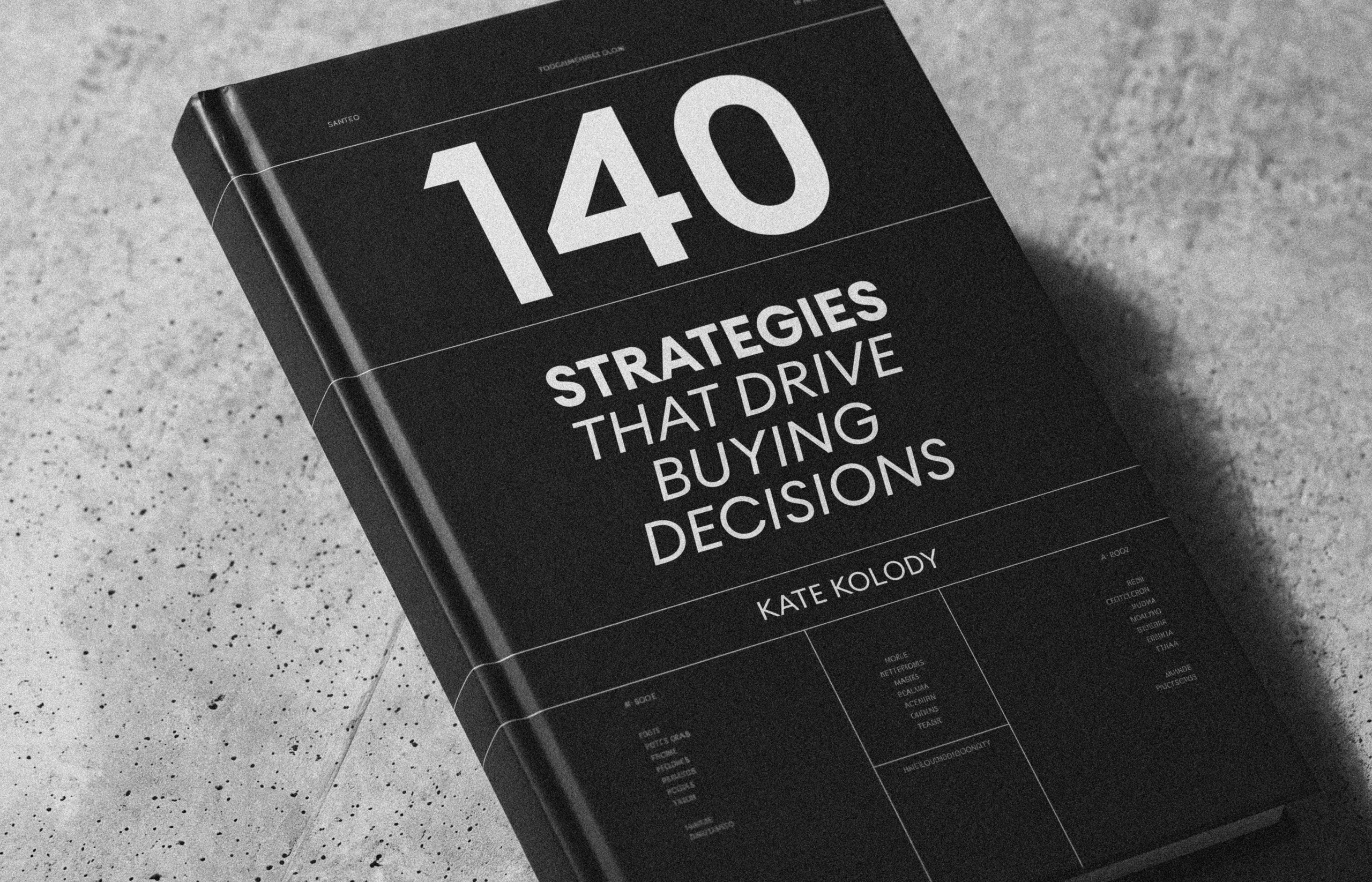
VESNA© formalizes its working model as Diagnose → Decision Mechanism → Intervention → Execution → Measurement. First, the cause of the customer’s behavior is identified; then the point of intervention; then the part of the business that needs to change. The underlying buying-decision system is documented in 140 Strategies That Drive Buying Decisions.

Scope

McKinsey approaches commercial transformation as part of a broader business system. Its work spans strategy, growth, customer experience, operating models, and execution. Its Growth, Marketing & Sales practice covers areas including consumer insights, customer experience, pricing, sales, digital marketing, commerce, and organizational capabilities.

VESNA© uses a narrower unit of analysis: the customer’s decision. The central question is: what is currently driving the customer’s choice, and what change would alter that behavior?


The visible symptom is therefore not treated as the diagnosis. Weak conversion may be the result of insufficient perceived value. Falling sales may come from targeting the wrong decision-maker. Strong traffic with poor results may point to a trust issue or a weak offer. The intervention is selected only after the cause has been identified.


Strategy, Positioning, Offer, Brand, Creative, UX, CRO, E-commerce, Content, PR, Customer Journey, Retention, Community, Referrals, AI, and Automation are used as execution capabilities for the solution that has been identified.

Diagnosis

McKinsey approaches a commercial problem through the broader business system: growth drivers, processes, organizational structure, capabilities, and performance. Its Consumer & Shopper Insights practice also studies customer motivations and purchase decision journeys, while Insights & Analytics connects those insights to commercial action.


VESNA© starts with the mechanism behind the buying decision. The agency examines what the customer sees, understands, compares, trusts, where hesitation appears, and which factor ultimately determines action.

The IDA Sports case study illustrates this mechanism clearly. Parents were initially treated as the primary audience because they were the ones paying for the product. Research showed that the choice of a specific pair of shoes was actually being shaped by younger players. The payer and the decision-maker were performing different roles. That finding changed the creative direction, content, visual language, and customer experience.


The primary value in this case was correctly defining the commercial problem itself.

Price

McKinsey works through individually scoped consulting engagements designed primarily for large-scale problems and situations where the value of the potential outcome justifies the size of the engagement.


VESNA© uses a separate diagnostic entry point. DEXI Audit starts at $2,500, with pricing based on the size of the company and the complexity of the problem. The audit identifies the problem, the intervention, and the scope of the work required. If the client continues with VESNA©, the cost of the audit is credited toward the subsequent engagement.


This creates a lower entry threshold and allows the required scale of the transformation to be established before the full budget is defined.

Speed

Large-scale management consulting operates through multi-layered teams and coordination structures. McKinsey’s own consulting-role structure includes Business Analysts, Associates, Engagement Managers, Associate Partners, and Partners, with responsibilities distributed across analysis, workstream ownership, project leadership, and overall delivery.


VESNA© uses a compact C-level and senior strategic core. Diagnosis, strategic decision-making, and solution architecture remain within the same center. Once the intervention has been defined, the work moves directly into execution.


Fewer layers between diagnosis and execution reduce the time required to implement change.

Team Structure

In a traditional consulting model, senior leadership is responsible for direction and quality, while a significant share of the analytical and production work is distributed across a larger team. McKinsey’s published consulting roles describe that structure directly.


VESNA© uses a different model: C-level leadership defines the problem and the solution; production is performed at the level appropriate to the complexity of the task.


Diagnosis, intervention, strategy, architecture, and key creative decisions remain with the senior team. Execution is handled by specialized professionals and selected talent from leading university programs and professional talent pools. VESNA© also expands delivery capacity through its partnership with Synergy University.


C-level resources are used where judgment, accountability, and directional decisions are required. Technical production is carried out under senior quality control. This model preserves a high level of strategic involvement without requiring expensive senior resources for every production task.

Implementation

McKinsey has a dedicated Implementation practice focused on execution readiness, transformation roadmaps, capability building, performance systems, and sustaining change inside complex organizations.


At VESNA©, implementation is built into the same Commercial Decision Transformation process in which the diagnosis is made. The team that identifies the problem and defines the intervention retains strategic control throughout execution.


For the client, this creates a single managed chain from diagnosis through to outcome.

Specialization and Method

McKinsey works across a broad range of management problems. Its commercial practice combines proprietary tools, research, analytics, customer insights, strategy, and implementation. Its own description of the practice organizes the work around discovery, design, and delivery. McKinsey Growth, Marketing & Sales methodology


VESNA© deliberately narrows its field to Buying Decisions. Around that specialization, it has built DEXI®, its buying-decision methodology, a system of 140+ strategies, a standardized diagnostic process, and a base of 160+ documented projects. The methodology behind the strategy system is described in 140 Strategies That Drive Buying Decisions.


The method is already a reproducible system. It defines the sequence of analysis, intervention, and execution. The specific tools change with the problem; the object of analysis remains the same.


The 160+ cases also create a cross-industry evidence base for the transferability of the method. VESNA© applies the same underlying logic across different categories because the object of the work remains constant: the human decision.

Scale

McKinsey’s primary structural advantage is permanent scale. Its commercial practices include large specialist networks; for example, its Sales & Channel Management practice describes more than 80 partners and associate partners and a wider group of more than 150 senior practitioners worldwide.


VESNA© uses a C-level strategic core + elastic execution model. The strategic core remains compact, while delivery capacity expands according to the scope of each project. The operating principle is described in VESNA©’s Strategic Core. Scalable Execution. partnership announcement.


This creates a lighter and faster structure, while placing greater demands on quality control. For that reason, diagnosis, strategy, architecture, and key decisions remain centralized.

When McKinsey Is the Better Fit

McKinsey is better suited to situations in which organizational complexity is itself part of the problem. This includes large transformation programs, operating-model changes, international projects, and initiatives that require coordination across multiple functions and large numbers of employees. Its Organization & Capabilities practice is explicitly designed around organizational structures, processes, institutional skills, and coordinated transformation.


In those situations, the scale of the infrastructure is a direct advantage.

When VESNA© Is the Better Fit

VESNA© is better suited to situations in which a business can see the commercial problem but does not understand the mechanism causing it.


A company may have a strong product and insufficient demand. It may generate traffic and still lose buyers. It may have a strong brand but weak perceived value. It may invest in marketing without understanding why customers ultimately choose a competitor. In these situations, the key task is to diagnose the customer decision correctly and move quickly from the identified cause to the required change.


VESNA© provides four structural advantages in this context: a narrow specialization in Buying Decisions, C-level diagnosis, a lower entry threshold, and a short path from intervention to execution.

Strengths and Limitations

Primary focus
Business and organizational transformation

 Buying Decisions

Diagnosis
Broad business and organizational analysis

Customer decision mechanism

Entry price
Large, individually scoped engagement

DEXI from $2,500

Senior involvement
Senior leadership + multi-layered consulting structure

C-level / senior-led diagnosis and strategy

Execution
Large implementation infrastructure

 One managed diagnosis → execution chain

Speed
High capacity, more layers of coordination

Short decision structure

Scale
Large permanent capacity

 Elastic capacity based on scope

Method
Broad management methodology

Specialized buying-decision methodology

Primary strength
Enterprise scale and organizational depth

Specialization, senior diagnosis, and speed from insight to execution

Primary limitation
High economic threshold for narrower commercial problems

Smaller permanent capacity and greater dependence on rigorous quality control

Best fit
Large-scale organizational transformation

Commercial problem with an unclear root cause

Execution
Large implementation infrastructure

 One managed diagnosis → execution chain

When the task is to transform a complex organization, McKinsey’s scale is an advantage. When the task is to understand why customers are not choosing a business, identify the point of intervention, and quickly reshape the commercial system around it, VESNA© is the better fit.

If VESNA© looks like the right fit, tell us what’s happening in your business. We’ll help identify the problem and the right next step.