
VESNA© grew out of a question that kept resurfacing across projects: why can a strong product, a compelling brand, and a well-designed customer experience still fail to produce the commercial result a business expects? Over time, the answer became increasingly clear. The critical point is the moment of choice — how a person perceives value, what they trust, what they compare, and why, at a specific moment, they move toward a business or away from it. That is the territory VESNA© chose to specialize in: Buying Decisions. The customer decision is the central object of our work, and commercial performance is treated as the downstream expression of that decision. This principle now sits at the center of the VESNA© methodology.
A client may see the problem in sales, demand, conversion, or customer response, but the same visible symptom can be produced by very different mechanisms. Perceived value may be lower than the product’s actual value. A customer may be comparing the business against the wrong alternative. The person making the decision may be different from the person the company is speaking to. Until that mechanism is understood, every major change remains a hypothesis. That is why our process follows a specific sequence: Diagnose → Decision Mechanism → Intervention → Execution → Measurement. We first establish what is happening, then identify the leverage point, and only after that determine what needs to change in the business.
First, Understand What Is Actually Happening
Execution has never been more accessible. Companies can assemble strong teams, adopt new technology, redesign an experience, or rebuild a customer journey relatively quickly. The harder question now comes earlier: which change is actually worth making? That is why diagnosis sits at the center of the VESNA© model. A mistake at this stage can launch an expensive transformation around the wrong problem, while a precise diagnosis can reduce what appeared to be a large transformation to one critical intervention.
DEXI® was developed as the diagnostic layer of this system. Its role is to move from a broad business symptom to a specific decision mechanism. Conversion, for example, tells you what is happening, but it rarely tells you why. The cause may sit in perceived value, trust, comparison, or the way the offer is being interpreted. DEXI® is designed to identify that mechanism, connect it to the commercial result, and define the point of intervention. The value of diagnosis is clarity: this is the cause, this is the mechanism, this is the leverage point, and this is the change worth making next.
A customer does not experience a business through its internal departments. Brand, product, interface, and communication arrive as one system, which means a single decision mechanism can run through several parts of the company at once. A change in positioning may require a different visual language. A new understanding of the decision-maker may reshape product hierarchy and the customer journey. A perceived-value problem may lead to a change in the offer or the way the product is presented. The scope follows the cause.
That logic is visible in our work with IDA Sports. A new understanding of who actually created the desire to buy changed the strategic direction of the work and then shaped creative direction, product hierarchy, and interface. Several execution layers came from one strategic finding. This is the VESNA© principle in practice: identify the change that needs to happen in the customer’s decision, then rebuild the necessary parts of the business around it.
Why VESNA© Looks at Business This Way
The VESNA© approach was shaped through a very specific professional progression: design → digital products → e-commerce → customer behavior → business strategy. That path matters because design teaches you to see a system through the person interacting with it. Product adds an understanding of behavior inside that system. E-commerce connects that behavior to measurable commercial outcomes. Business strategy expands the question from a single touchpoint to the full system producing the result.
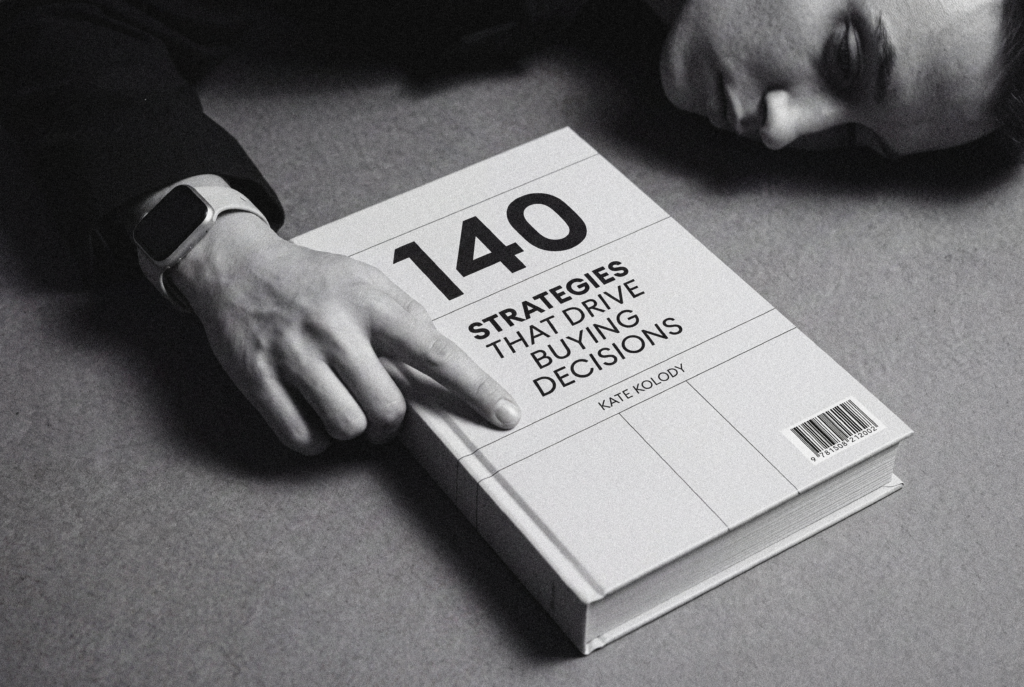
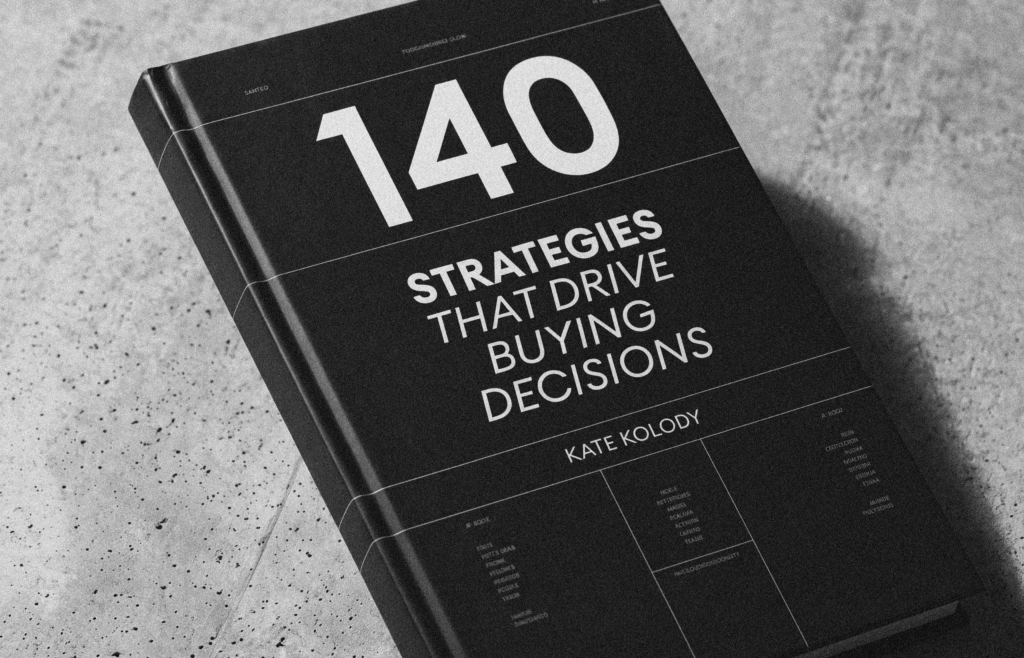
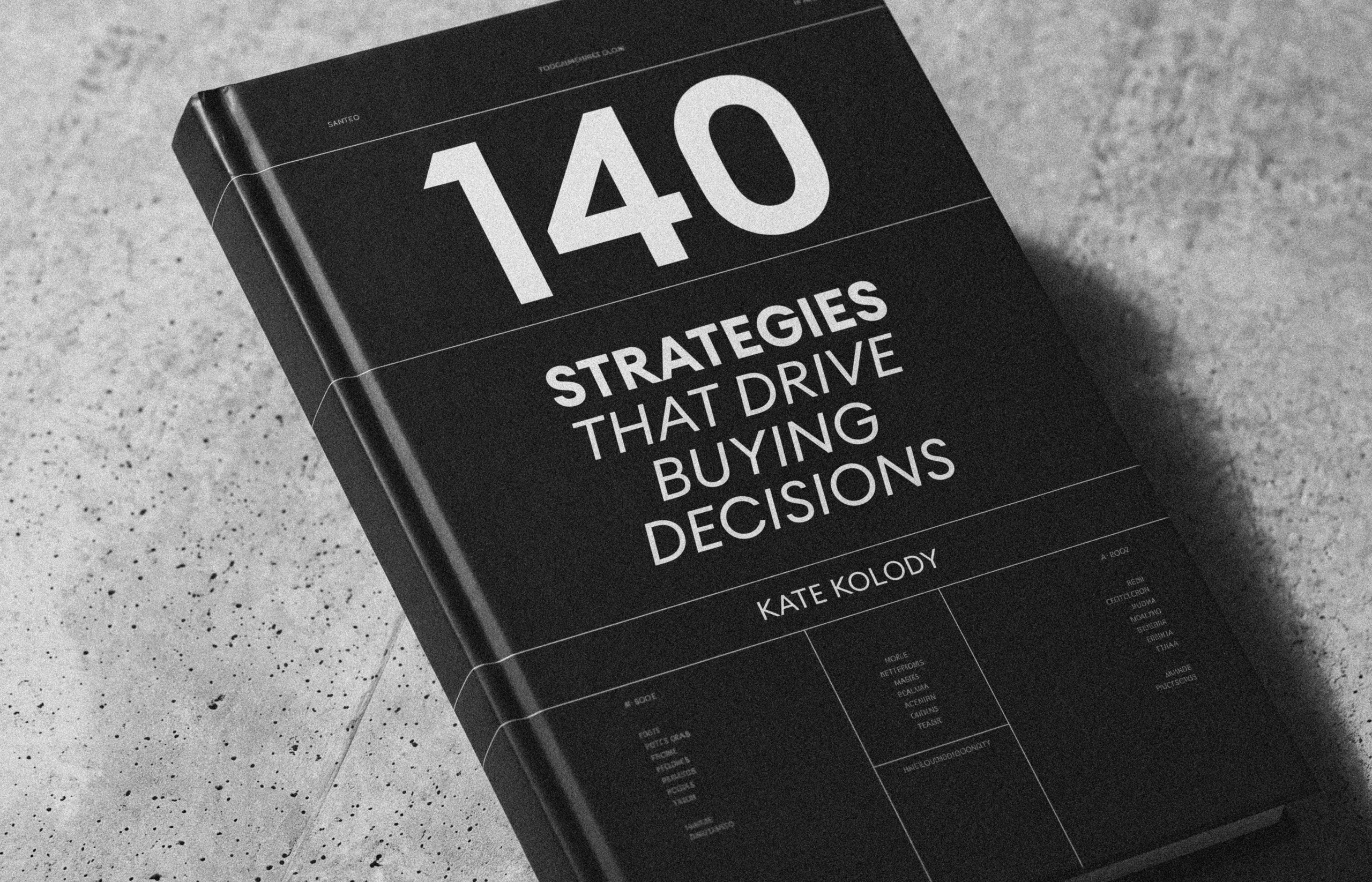
This is why visual direction, interface, or content can become strategic instruments inside VESNA© when they sit at the leverage point. In another project, the solution may live somewhere entirely different. The constant is the same: the human decision. That perspective gradually moved from practical experience into a formal methodology. The same decision patterns kept appearing across different industries, products, and business problems, and over time those patterns were systematized into DEXI®, our buying-decision methodology, and 140 Strategies That Drive Buying Decisions. Practical knowledge that would normally remain inside individual practitioners began to become intellectual property.
From Experience to a System of Thinking
140 Strategies That Drive Buying Decisions is one of the clearest expressions of how this thinking works. The book begins with strategic moves, then moves toward mechanism recognition, and eventually toward the ability to design original solutions. The end goal is captured in the idea of the 141st strategy: understanding the structure of a problem well enough to create the next move yourself. That is one of the core beliefs behind VESNA©. Strong strategy comes from understanding the mechanism deeply enough to build the right response to a specific situation.
This is also why we treat cases as material for reasoning rather than as templates to copy. Every successful move exists inside a context: a particular customer, a particular set of constraints, and a particular competitive environment. The real value of a case lies in understanding why it worked. Once the mechanism is clear, it can be adapted. Once only the visible form is copied, the action becomes detached from the reason that made it effective in the first place.
That is why constraints and contradictions matter so much inside our methodology. They define the true design space of the problem and often reveal leverage points that remain invisible under a standard analysis. Strategy, in this sense, becomes the discipline of using the reality of the business more precisely.
A Broader Intellectual Territory
Over time, Buying Decisions expanded beyond client work. DEXI® formalized diagnosis. 140 Strategies formalized strategic reasoning. The White Room extends the same territory into professional judgment and the way experienced people make complex decisions. The connecting idea is choice.
In VESNA©, it is the customer’s choice. In the book, it is the mechanism that shapes that choice. In The White Room, it becomes the way accomplished people think, judge, and decide. Together, these projects form a broader intellectual system around human behavior, judgment, and decision-making.
This also explains why VESNA© develops its methodology publicly. The company is building value around a distinct way of thinking about commercial problems. Experience becomes a framework. The framework becomes a system. The system can then be applied to new problems regardless of which execution capability is ultimately required. The deeper story behind that evolution is explored in Inherited Vision, which traces the intellectual and professional influences that shaped Kate Kolody’s approach to structure, design, human behavior, and business.
What Ultimately Makes VESNA© Different
At the center of VESNA© is one causal chain: Problem → Human Decision → Mechanism → Leverage Point → Strategy → Intervention → Commercial Result. That sequence defines how we diagnose a problem, how we build strategy, and how we choose execution. Every project can lead to a different intervention, but the method remains constant.
We want to understand why the market is making the decision it is making now, identify the mechanism shaping that decision, find the point where change can have the greatest effect, and then rebuild the necessary part of the business around that finding. That is why VESNA© specializes in Buying Decisions.