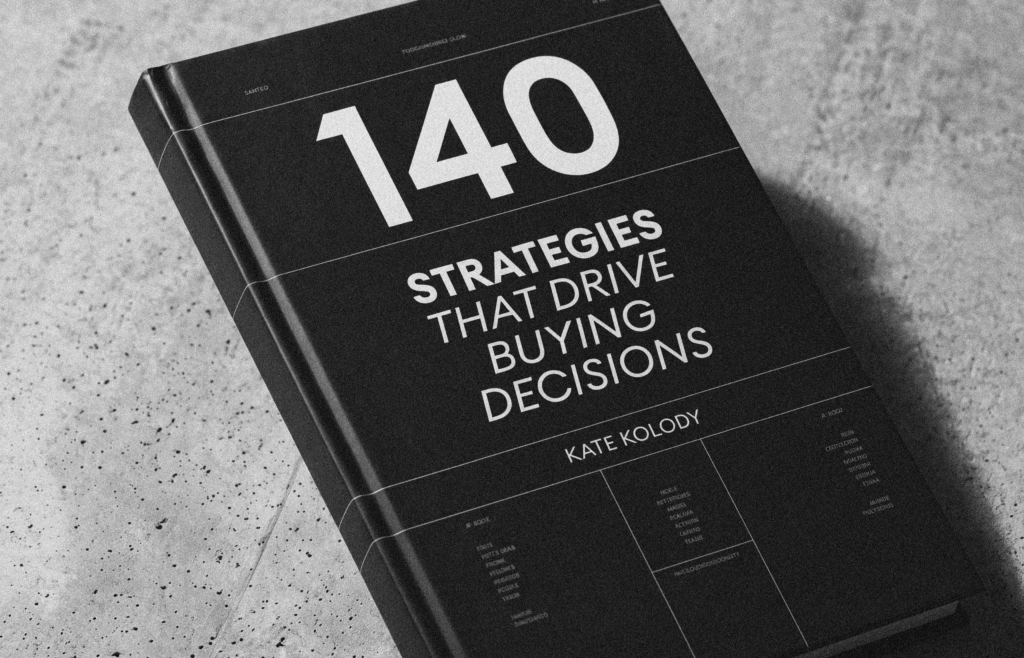
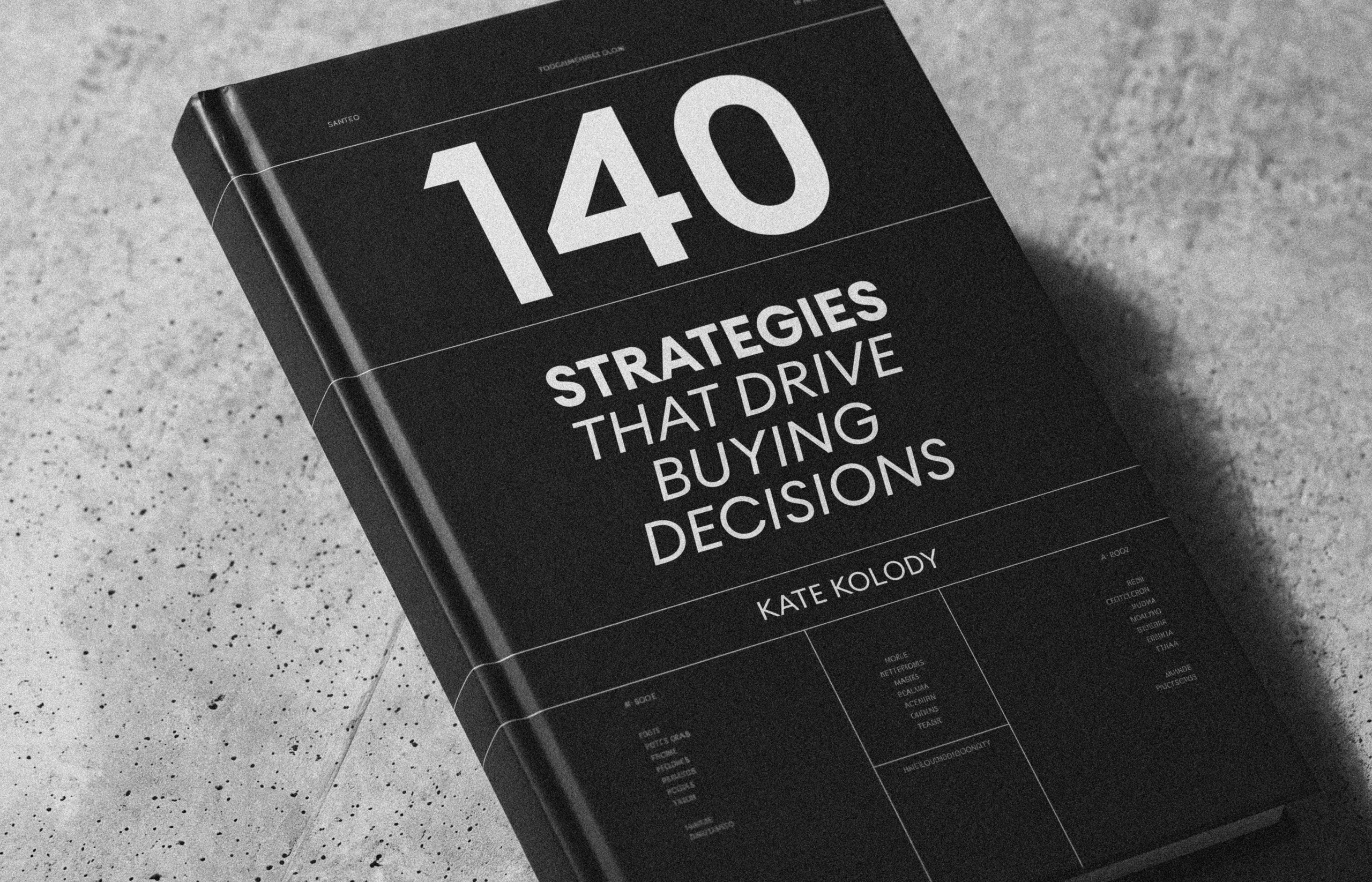
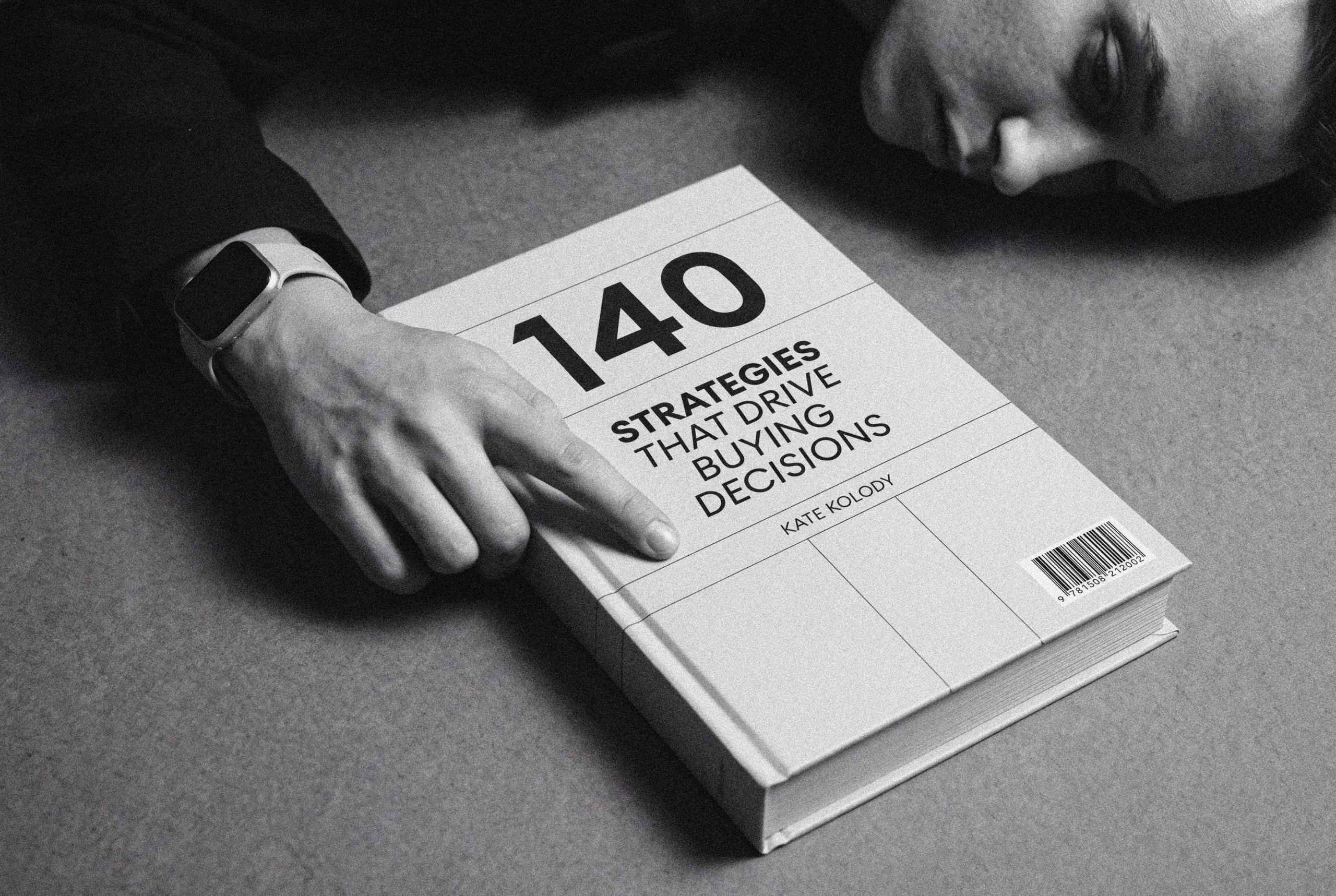

The title promises 140 strategies that influence buying decisions. They are all there — more than 140 techniques and stratagems built around a single commercial question: why does someone buy, hesitate, postpone the decision, or walk away?
But the list of strategies is not the real product of the book.
If, by the final chapter, the reader has simply memorized a few dozen useful techniques, the book has only done half its job. Its real value appears later — when the reader encounters a situation that is not in the book and can construct the 141st move independently.
That is why the title is slightly deceptive.
At first, 140 Strategies That Drive Buying Decisions does feel like a large library of commercial solutions. Each chapter offers a distinct move: a way to redirect attention, reduce perceived risk, change the perception of value, or remove a barrier that prevents a decision. After the first few dozen chapters, something more interesting begins to happen. The individual techniques start to resolve into recurring mechanisms.
The product changes. The market changes. The context changes. Yet the structure of the decision begins to look familiar. In one case, the customer does not perceive enough value. In another, the risk feels greater than the potential reward. Somewhere else, the offer loses before the customer has even examined it closely. Gradually, the name of the technique matters less than understanding which part of the decision it affects, and why that intervention works.
At that point, the book changes function. A reference guide becomes a training system for recognition.
A purchase begins long before the Buy button. By the time someone clicks, they have already formed an impression, evaluated the offer, compared it with alternatives, and decided whether they have enough reason to continue. Price, content, reviews, terms, and interface all become part of a single decision sequence. Analytics can usually show where that sequence broke. The book addresses the harder question: why did it break, and what needs to change for the decision itself to change?
This is where one of the book’s central ideas appears: contradiction. A customer wants an outcome while simultaneously seeing a reason to stop. A business wants growth within real constraints. Strengthening one part of an offer can unexpectedly weaken another. As long as the conflict remains vaguely defined, the company tends to treat symptoms. Once the contradiction is stated precisely, the space for solutions expands.
The book therefore teaches the reader to look for something more fundamental than a ready-made marketing answer: the point of intervention.
That also explains its unusual architecture. The theory arrives later by design. The reader first encounters dozens of concrete solutions and gradually begins to recognize recurring structures. Only then do classification, combinations, resources, contradictions, and the method for building strategy appear.
The system is first learned through examples. Only afterward does it acquire a language.
From there, the reader begins to see the same mechanism across very different commercial situations. Techniques can be combined, reordered, reinforced, and adapted to specific constraints. The emphasis shifts from applying a known tactic to constructing a solution.
And this is where the 141st strategy appears.
It is not hidden in the final chapter, and it cannot be memorized. It appears when a new commercial problem no longer requires an exact match somewhere in the book. The reader can see the structure of the problem, identify the available resource, formulate the contradiction, and construct a move independently.
140 Strategies That Drive Buying Decisions is not meant to be consumed like a conventional business book, one chapter after another simply to reach the end. It is a working manual. A few techniques, a pause, a real business problem, an attempt to recognize the same mechanism in a different context — that rhythm is much closer to the way the book is intended to be used. Over time, it becomes something to return to whenever the market shifts, an offer stops working, or customer behavior begins to diverge from what the team expected.
The task remains the same: find the move.
At a higher level, individual techniques begin to form strategy. A single move solves a local problem; combinations create a larger tactical structure; strategy gives those decisions direction while remaining flexible enough to respond to reality.
That matters because platforms and marketing tools change quickly. Channels lose relevance. Tactics become standardized. Some forms of execution are automated entirely. The underlying mechanics of human choice endure much longer.
The deeper objective of 140 Strategies That Drive Buying Decisions is to change the way the reader sees a commercial problem: to recognize the mechanism behind the symptom, the resource inside the constraint, and the possibility for a solution inside the contradiction.
The book does contain more than 140 strategies. They provide a broad vocabulary of possible actions and show how many different ways a single commercial problem can be approached.
But that is only the entry point.
At some point, the book stops being a collection of answers.
It becomes a way of creating them.
The real product of this book is not its 140 techniques, but the ability to create the 141st one yourself.